DEF System Repair Near Me: Common DEF Problems on Semi Trucks and How to Avoid Breakdowns
DEF (Diesel Exhaust Fluid) systems are one of the most common causes of engine derate and unexpected breakdowns for truck drivers. Whether you drive a Freightliner Cascadia, Kenworth T680, Peterbilt 579, Volvo VNL, or International LT, DEF and emissions system failures can quickly turn into lost time, expensive towing, and long repair delays.
If you are searching for DEF system repair near me, this guide explains the most common DEF problems, what causes them, and what you can do to reduce your risk of getting stranded.
What Is the DEF System on a Semi Truck?
The DEF system is part of the truck’s emissions system. It works with the SCR (Selective Catalytic Reduction) system to reduce harmful exhaust gases.
When DEF components fail, the truck may trigger warning messages and eventually enter derate mode, limiting speed and horsepower.
Most Common DEF System Problems on Heavy Duty Trucks
1. DEF Quality Sensor Failure
Many trucks show “DEF Quality Poor” warnings even when DEF is clean. Sensors can fail due to contamination, age, or electrical issues.
2. NOx Sensor Failure
NOx sensors are one of the most common emissions-related failures on modern trucks. They can fail due to heat exposure, vibration, or moisture intrusion.
3. DEF Heater Problems (Winter Failures)
DEF freezes at around 12°F (-11°C). If your DEF heater fails, the truck may not dose correctly and will set fault codes.
4. DEF Injector Clogging and Crystallization
Crystallization happens when DEF dries inside the injector or lines. This can block proper DEF dosing and trigger SCR fault codes.
5. DEF Pump or Dosing Module Failure
The DEF pump is responsible for delivering DEF fluid into the exhaust system. Pump failures often lead to immediate warnings and derate conditions.
Common Warning Signs of DEF Problems
If you see any of these messages, it’s time to take action immediately:
“Service DEF System”
“SCR Efficiency Low”
“DEF Quality Poor”
“Engine Derate Imminent”
“5 MPH Countdown”
Once the countdown begins, the truck may reduce speed drastically until repairs are made.
Truck drivers can reduce the risk of DEF breakdowns by following a few simple habits:
Use high-quality DEF from trusted sources
Keep DEF containers sealed and stored properly
Avoid running DEF levels too low
Keep DEF caps clean and tight
Avoid excessive idling when possible
Don’t ignore DEF warning lights
Preventive habits can save thousands in downtime and emergency repair costs.
When to Search for DEF System Repair Near Me
If your truck has warning lights or derate messages, don’t wait. DEF and SCR problems often get worse quickly and can leave you stranded.
You should search for a repair shop immediately if:
You are already in derate mode
The truck displays a countdown warning
The truck loses power or throttle response
The check engine light appears with DEF/SCR warnings
Find DEF System Repair Near Me (Fast)
If you are currently on the road and need help, 4roadservice.com helps drivers locate nearby truck repair shops, mobile mechanics, and roadside services.
You can search by location to find the closest providers that handle:
DEF issues can start small but quickly turn into a major breakdown. If your truck shows DEF warnings, don’t gamble with it—get it checked before it forces a shutdown.
When a truck breaks down, the decision to call for emergency towing or to seek on-site repair can be critical. Understanding the signs that indicate when to call for help can save time, money, and ensure safety on the road. This article will explore the key indicators for emergency towing, the types of repairs that can be handled on-site, and the cost comparisons between these two services. Additionally, we will discuss safety and legal considerations, decision-making factors, and how truck drivers can prepare for emergencies to minimize downtime. By the end, you will have a comprehensive understanding of when to call for emergency towing versus on-site repair.
What Are the Key Signs That Indicate Emergency Towing Is Needed?
Recognizing the signs that necessitate emergency towing is crucial for truck drivers. Emergency towing is typically required when there is a severe mechanical failure that cannot be resolved on-site. This can include issues such as engine failure, transmission problems, or significant electrical malfunctions. Timely towing is essential to prevent further damage to the vehicle and ensure the safety of the driver and other road users.
How to Diagnose a Truck Breakdown Requiring Heavy Duty Towing
Diagnosing a truck breakdown that requires heavy-duty towing involves several methods. Common diagnostic tools include onboard diagnostics (OBD) systems, which can provide error codes indicating specific issues. Signs of critical failure may include unusual noises, warning lights on the dashboard, or a complete loss of power. If these symptoms are present, it is advisable to call for “emergency towing” to avoid exacerbating the problem.
What Safety Risks Arise from Delaying Emergency Towing?
Delaying emergency towing can lead to significant safety risks. Increased accident risk is a primary concern, as a broken-down vehicle can obstruct traffic and create hazardous conditions. Additionally, there are legal implications associated with roadside breakdowns, including potential liability for accidents caused by an unattended vehicle. Prompt towing mitigates these risks and ensures the safety of all road users.
Which Repairs Can Be Effectively Handled by Mobile Vehicle Repair On-Site?
Mobile vehicle repair services can address a variety of issues directly at the breakdown site, providing convenience and efficiency. Common repairs include tire changes, battery jump-starts, and fluid replacements. These services can often resolve minor issues without the need for towing, allowing drivers to get back on the road quickly.
What Types of Emergency Roadside Repair Are Commonly Performed by Mobile Mechanics?
Mobile mechanics typically perform several types of emergency roadside repairs, including:
Tire Changes: Replacing flat or damaged tires to restore mobility.
Battery Services: Jump-starting or replacing dead batteries to ensure the vehicle can start.
Fluid Replacements: Adding or replacing essential fluids, such as oil or coolant, to prevent engine damage.
These services are designed to be completed quickly, minimizing downtime for truck drivers.
How Does Mobile Truck Repair Prevent the Need for Towing?
Mobile truck repair can effectively prevent the need for towing by addressing issues on-site. For instance, if a driver experiences a flat tire or a dead battery, a mobile mechanic can provide immediate assistance, allowing the driver to continue their journey without the delay of waiting for a tow truck. This not only saves time but also reduces costs associated with “towing services”.
How Do Costs Compare Between Emergency Towing and On-Site Repair Services?
Understanding the cost differences between emergency towing and on-site repair services is essential for truck drivers. Emergency towing can be more expensive due to the logistics involved, while on-site repairs often provide a more cost-effective solution for minor issues.
Service Type
Cost Range
Service Details
Heavy Duty Towing
$250 – $400 per hour
Depends on type (regular or rotator), usually has 3 hour minimum plus mileage charges
Road Service
$100 – $200 per hour
Depends on location and time of day/night; call out fee or 2 hour minimum common
Towing Range Average
$900 – $3000
Costs vary by location, time, and mileage; costs add up very fast
Small Roadside Repair
$300 – $900 average
Typical cost for minor repairs on-site
This table illustrates the typical price ranges for both services, highlighting the potential savings associated with mobile repairs and the higher costs of towing depending on circumstances.
What Are the Typical Price Ranges for Heavy Duty Towing vs. Mobile Repair?
Heavy-duty towing services generally cost between $250 and $400 per hour depending on the type of tow (regular or rotator), with a usual minimum charge of three hours plus mileage fees. Roadside mobile repair services typically range from $100 to $200 per hour depending on location and time of day or night, often with a call-out fee or a two-hour minimum. The average total towing cost can range from $900 to $3000 depending on location, time, and mileage involved, with costs adding up quickly. Small roadside repairs average between $300 and $900, making them a more economical choice for minor issues. Understanding these costs can help truck drivers budget for unexpected roadside assistance.
How Can Truck Drivers Budget for Unexpected Roadside Assistance?
To effectively budget for unexpected roadside assistance, truck drivers should consider setting aside emergency funds specifically for towing and repair services. Understanding the typical costs associated with these services can help drivers plan accordingly. Additionally, having a list of reliable mobile mechanics and “towing services” can expedite the process when emergencies arise.
What Safety and Legal Considerations Should Truck Drivers Know When Choosing Towing or Repair?
Safety and legal considerations are paramount when deciding between towing and repair services. Truck drivers must be aware of the legal requirements for emergency vehicle recovery, which can vary by state or country. Ensuring compliance with these regulations is essential to avoid potential fines or legal issues.
What Are the Legal Requirements for Emergency Vehicle Recovery?
Legal requirements for emergency vehicle recovery often include proper signage and safety measures to protect both the driver and other road users. Drivers should familiarize themselves with local laws regarding roadside assistance to ensure compliance and safety during breakdowns.
How to Ensure Safety During Roadside Assistance for Trucks?
Ensuring safety during roadside assistance involves several key practices:
Using Hazard Lights: Activate hazard lights to alert other drivers of the situation.
Staying Visible: Position the vehicle safely off the road, if possible, to avoid accidents.
Communicating with Other Drivers: Use warning triangles or flares to enhance visibility and communicate the need for caution.
These measures help protect the driver and other road users during roadside assistance.
How to Decide Between Emergency Towing and Mobile Vehicle Repair?
Deciding between emergency towing and mobile vehicle repair requires careful consideration of several factors. The severity of the breakdown, the location of the vehicle, and the availability of services all play a crucial role in this decision-making process.
Optimizing the entire service network, including repair logistics and decision-making processes, is crucial for improving sustainability and efficiency in the automotive industry.
Optimizing Truck Service Networks & Repair Logistics
Therefore, the purpose of the study is to develop a simulation model of a service center, which is the primary link that forms a reverse logistic flow and is an intermediate storage warehouse. In view of the fact that such parameters of the system as the time of occurrence of the reverse flow, the duration of repair and storage in the warehouse, are set in the form of distribution laws, it becomes possible to take into account the uncertainty of the processes taking place. The developed simulation model can be considered as a decision-making tool when organizing a reverse logistics network within the service system of an automotive company.
What Factors Influence the Choice Between Towing and On-Site Repair?
Key factors influencing the choice between towing and on-site repair include:
Severity of the Breakdown: If the issue is severe, towing may be necessary.
Location of the Vehicle: If the vehicle is in a dangerous location, towing may be the safer option.
Availability of Services: The proximity of mobile repair services can impact the decision.
Understanding these factors can help truck drivers make informed choices during emergencies.
Are There Decision Trees or Tools to Help Truck Drivers Choose the Right Service?
Decision trees and tools can assist truck drivers in determining whether to call for towing or mobile repair. These tools often outline the symptoms of various issues and provide guidance on the appropriate course of action. Utilizing such resources can streamline the decision-making process and enhance safety.
How Can Truck Drivers Prepare for Emergencies to Minimize Downtime?
Preparation is key to minimizing downtime during emergencies. Truck drivers can take several proactive steps to ensure they are ready for unexpected breakdowns.
What Are Essential Emergency Roadside Repair Kits and Services?
An essential emergency roadside repair kit should include:
Basic Tools: Wrenches, screwdrivers, and pliers for minor repairs.
First Aid Kit: To address any injuries that may occur during a breakdown.
Emergency Supplies: Flares, reflective triangles, and a flashlight for visibility.
Having these items readily available can significantly reduce response time during emergencies.
How Does Regular Maintenance Reduce the Need for Emergency Towing?
Regular maintenance plays a crucial role in preventing breakdowns and reducing the need for emergency towing. By conducting routine checks on critical systems such as brakes, tires, and fluids, truck drivers can identify potential issues before they escalate. This proactive approach not only enhances safety but also saves money by avoiding costly towing services.
Best Practices for Handling Truck Breakdowns
When possible, it is best to drive to the closest repair shop if it can be done safely. For minor repairs, calling for a mobile repair service near your location is recommended to avoid the higher costs and delays associated with towing. Towing should be considered the third option, primarily reserved for major breakdowns or situations on interstates where mobile repairs are not permitted. Following these best practices can help minimize downtime and reduce expenses during truck breakdowns.
When your truck breaks down—especially in the middle of the night or in an unfamiliar location—every minute of downtime costs you money. Finding a reliable, verified truck repair shop that’s actually open 24/7 shouldn’t add to your stress. That’s exactly why we built 4RoadService.
The Challenge Every Truck Driver Faces
We’ve heard the same story countless times: You’re broken down at 2 AM, scrolling through Google results, calling shop after shop only to reach voicemail or find out they don’t actually offer 24-hour service despite what their website claims. You waste precious hours that cut into your delivery schedule and your bottom line.
The 4RoadService Solution
4RoadService is North America’s most comprehensive commercial truck repair directory, connecting drivers with verified service providers instantly. Whether you need a mobile mechanic, emergency towing, tire service, or a full-service repair facility, you can find verified help in seconds—not hours.
Download the free app from the Apple App Store or Google Play Store
Open the app and allow location access for instant GPS-based results
Tap “Find Service” to see all truck repair shops near your current location
Filter by availability using the “24/7” badge to see only shops with verified round-the-clock service
View details including services offered, distance from your location, and real driver reviews
Call directly or get GPS directions with a single tap
Method 2: The 4RoadService Website
Can’t download the app right now? Visit www.4roadservice.com from any device:
Click “Find Service Near Me” on the homepage
Enter your location via city, zip code, or even interstate and mile marker
Apply filters for 24/7 availability, specific services needed, or truck brand expertise
Browse verified shops with complete contact information and service details
Call directly or save information for quick reference
Why Drivers Trust 4RoadService
Verified Listings: Every shop is pre-verified for accuracy—no dead ends or disconnected numbers
Real 24/7 Availability: The 24/7 badge means they’re actually available around the clock, not just claiming to be
Comprehensive Coverage: Thousands of locations across the US and Canada
Mobile Repair Options: Many shops offer mobile service—they come to you when possible
Detailed Filtering: Search by specific needs—diesel repair, brake service, electrical diagnostics, DEF systems, and more
Driver Reviews: See real feedback from other professional drivers
Completely Free: No subscription fees, no hidden costs—just access to the help you need
Services You Can Find
Emergency roadside repair
Mobile diesel mechanics
Heavy-duty towing
Tire service and replacement
Brake system repair
Electrical and computer diagnostics
DEF system service
Transmission repair
Trailer maintenance and repair
Pre-trip inspections
And much more
Don’t Wait Until You’re Stranded
The best time to download 4RoadService is right now—before you need it. Having instant access to verified repair shops can save you hours of downtime, reduce stress, and potentially save thousands in lost revenue.
Get Started Today
Download the app: Available free on Apple App Store and Google Play Store
Visit the website: www.4roadservice.com
Bookmark for emergencies: Save the link for quick access when you need it most
Stay safe on the road, and keep those wheels turning. With 4RoadService, help is always just seconds away.
Published: January 6, 2026 | Reading Time: 8 minutes
Every truck driver knows the sinking feeling when something goes wrong on the highway. Whether it’s a blown tire, overheating engine, or mechanical failure, knowing exactly what to do when your truck breaks down can mean the difference between a minor delay and a dangerous situation.
Breaking down on a busy interstate presents unique challenges. You’re dealing with high-speed traffic, limited safe space, and the urgent need to get your rig—and possibly your time-sensitive load—back on the road. This comprehensive guide will walk you through every step to take when your semi truck breaks down on the highway, from the initial emergency response to getting back on the road safely.
Immediate Safety Steps: First 60 Seconds
When you first realize your truck is breaking down, your priority is safety. Here’s what to do in the critical first minute:
Turn on your hazard lights immediately. This alerts other drivers that you’re experiencing trouble and to give you space.
Check your mirrors constantly. You need to know what traffic is doing around you before making any moves.
Safely move to the shoulder. If possible, get as far right as you can. Don’t slam on the brakes—slow down gradually while checking mirrors. If you can’t make it to the shoulder, try to reach the next exit.
Set your parking brake. Once stopped, engage the parking brake and put the transmission in neutral or park.
Deploy emergency triangles or flares. Place them 10 feet, 100 feet, and 200 feet behind your vehicle. If you can’t safely exit to place them, skip this step—your safety comes first.
Critical Safety Note: If you cannot safely reach the shoulder and are stuck in a traffic lane, stay in your cab with your seatbelt fastened, hazards on, and call 911 immediately. Do not attempt to exit the vehicle in active traffic.
Assess the Situation
Once you’re safely stopped with hazards on, take a moment to assess what went wrong:
What You Can Check From the Cab
Gauges and warning lights: Check temperature, oil pressure, air pressure, and any warning lights
Unusual sounds or smells: Grinding, hissing, burning smells, or other abnormalities
Loss of power: Complete engine failure or reduced power
Brake issues: Air brake warning, soft pedal, or pulling to one side
Tire problems: Blowout, flat, or unusual handling
When NOT to Exit Your Cab
Don’t exit your vehicle if:
You’re on a narrow shoulder with high-speed traffic passing close by
Visibility is poor (heavy rain, fog, darkness)
You’re on a curve or hill where approaching drivers have limited sight distance
There’s smoke or fire—call 911 and move away from the vehicle immediately
Your life is worth more than any inspection. If conditions are unsafe, stay in your cab and wait for emergency services or roadside assistance.
Contact the Right People in the Right Order
Once you’ve secured the scene and assessed the damage, it’s time to make some calls:
Turn heat on full blast: This helps pull heat away from the engine
Don’t open the radiator: Let it cool completely first (at least 30 minutes)
Find help: Search 4RoadService for diesel engine specialists near you
Brake System Warning
Do NOT drive: Even a short distance is too dangerous
Call for heavy towing: Use 4RoadService to find towing services that can safely transport your truck
Have it towed to a brake specialist: Don’t risk lives trying to “make it work”
Transmission Problems
Check fluid level: If safe to exit, check for leaks or low fluid
Don’t force it: Grinding gears or no engagement means you need a tow
Find a transmission specialist: Use 4RoadService to locate shops that specialize in heavy-duty transmissions
Preventing Future Highway Breakdowns
While some breakdowns are unavoidable, many can be prevented with proper maintenance:
Pre-Trip Inspections Are Critical
Check tire pressure and tread depth daily
Monitor fluid levels (oil, coolant, DEF)
Test lights and signals
Listen for unusual sounds
Check air brake system
Follow Maintenance Schedules
Keep up with scheduled PM services
Don’t ignore warning lights or unusual symptoms
Use quality parts and fluids
Keep detailed maintenance records
Build a Network of Trusted Service Providers
Before you break down, prepare by:
Using 4RoadService to identify quality repair shops along your regular routes
Saving favorite service providers in the app for quick access
Reading driver reviews to find reliable providers
Sharing your network with other drivers in your fleet
Essential Items for Your Emergency Kit
Every truck should have these items for highway breakdowns:
Safety Equipment
DOT-approved emergency triangles (3 minimum)
High-visibility safety vest
Flashlight with extra batteries
Fire extinguisher (properly rated)
First aid kit
Communication & Documentation
Fully charged phone with car charger
4RoadService app downloaded and ready
Important phone numbers written down
Camera for documentation
Notepad and pen
Basic Tools & Supplies
Basic hand tools
Spare fuses
Duct tape and zip ties
Extra coolant and oil
Tire pressure gauge
Get Back on the Road Faster
Breaking down on the highway is stressful, but knowing exactly what to do makes all the difference. By following this checklist—prioritizing safety, contacting the right people, and finding qualified help quickly—you can minimize downtime and get back to work safely.
When your truck breaks down on the highway, every minute counts. Don’t waste time calling random shops or waiting for callbacks. 4RoadService connects you instantly with verified, 24/7 truck repair services, mobile tire repair, heavy-duty towing, and more—all near your exact location.
Download the 4RoadService app today for iOS and Android, or visit 4roadservice.com. Be prepared before you need us—because when your truck breaks down on the highway, we’ll help you find the right help, right now.
Managed Services are companies that organize service or repairs for you but generally do not own a shop or service vehicles, and do not do the repair themselves. Usually when you hire a Managed Service to work on your truck they will sub-contract to a mechanic close to you.
Like any purchase, using a Managed Service to repair your truck has both benefits and drawbacks.
Benefits of Managed Services
Ease of mind: the Managed Service provider handles finding a reliable service provider for you.
You know who to call: Many managed service providers are large, so you can call one phone number wherever you are.
Simple Billing: You get one bill from the Managed Service provider so it’s easier to reconcile your accounting.
Drawbacks of Managed Services
Indirect Communication: When dealing with a Managed Service provider you don’t deal with directly with the person who will fix your truck. Adding an extra layer of communication may add confusion to your repair.
Cost: Managed Service providers generally charge the price they pay for the repair plus an additional fee.
Managed Services on 4RoadService
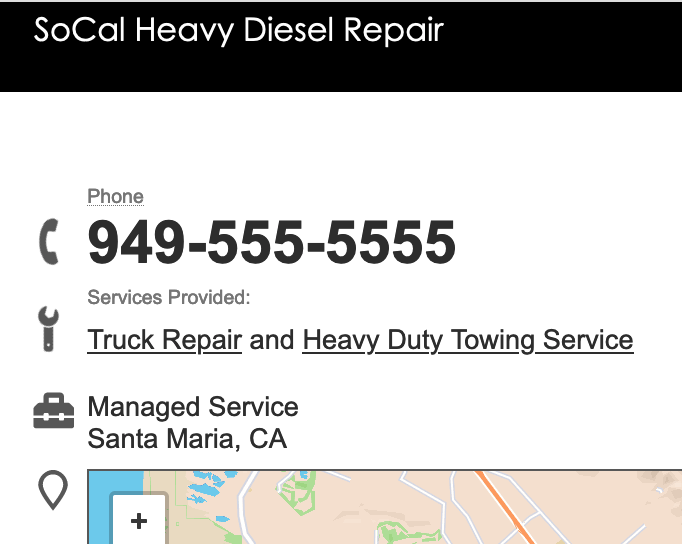
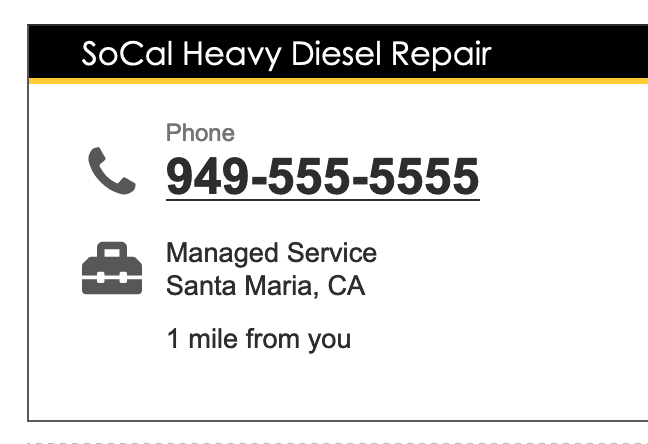
It is important that you can make your own choice about using Managed Services for your repairs, so they appear on 4RoadService.com with the words “Managed Service” where the address would be, and a toolbox icon where the building or truck icon appears for the provider’s location. Here’s how it looks:
Managed Service
This shows a listing is a Managed Service.
Managed Services look like this in search results.
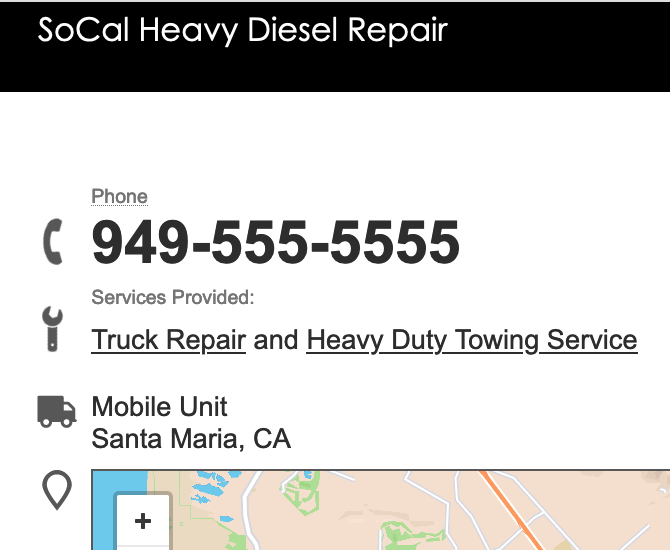
This is what mobile providers and providers with shops look like:
Provider that only provides Mobile Repair
Here we can see this provider only provides mobile service.
Search Results showing a provider that only provides mobile service.
Provider with a location you can visit:
Listing Details page showing the location you can go to.